
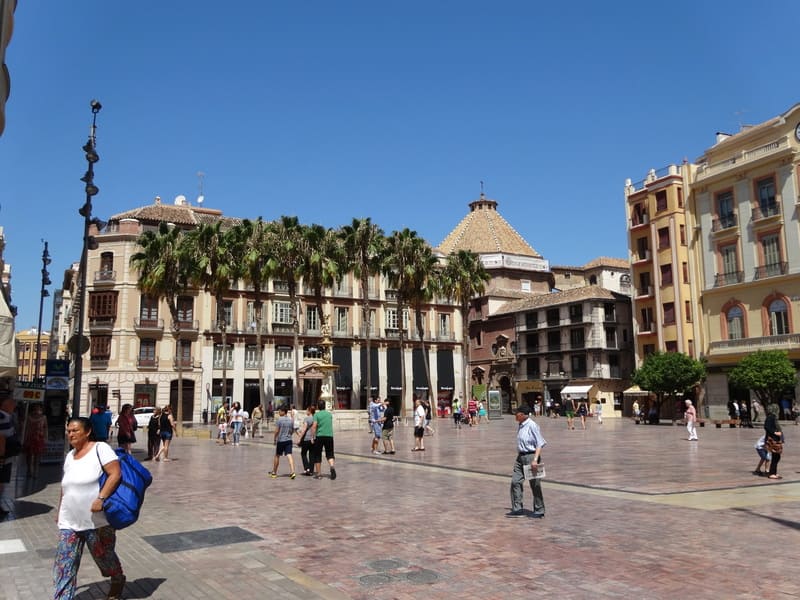
The Plaza de la Constitución is one of the most emblematic spots in Malaga, not only because of its central location, but also because of its rich history that has witnessed countless cultural, social and political events. This square, which has evolved over the centuries, is a reflection of the transformation of the city, from its Nasrid era to its current role as a cultural and social center. In this article, we will explore the history, architecture and cultural importance of the square, as well as the historical events it has hosted and its relationship to other nearby tourist sites.
Origins in the Nasrid period
The Plaza de la Constitución has its roots in the Nasrid period (13th-15th centuries), when Malaga was part of the Kingdom of Granada. At that time, the square was known as the “Almoina” or the “city market”, a center of commerce and social activity. During this period, the square was surrounded by buildings of great importance, both administrative and commercial, and was a meeting place for the city’s inhabitants.
In the Muslim period, the square was also a transit area to the Alcazaba of Malaga, which gave it a strategic character. With the reconquest of the city in 1487 by the Catholic Monarchs, the square became part of the new Christian urban fabric, but continued to be a center of great importance.
Transformations after the reconquest
After the reconquest of Málaga, the Plaza de la Constitución underwent several changes. In the first centuries of the modern age, the square became the heart of the social and administrative life of the city. In the 16th century, Malaga began to consolidate as an important commercial port, which spurred economic growth and expansion of the square. During this period, several public and religious buildings were built around it, such as the Church of San Agustín, which added architectural value to the square.
Name changes throughout history
Over the centuries, the square has undergone several name changes, reflecting the political transformations that Spain has undergone. One of the most significant moments occurred in 1812, when Spain adopted the Constitution of Cadiz, a fundamental document in the country’s history. In honor of this constitution, the square adopted the name Plaza de la Constitución, a name that has endured to the present day.
However, during the Franco dictatorship, the name of the square was changed to Plaza de José Antonio Primo de Rivera, in honor of the leader of the Falange. After the democratic transition and the restoration of democracy in Spain, the square recovered its original name, Plaza de la Constitución, as a symbol of the new political stage of the country.
Its role in important historical events
The Plaza de la Constitución has been the scene of numerous historical events that have marked the history of Malaga and Spain. One of the most relevant events took place in 1812, with the proclamation of the Constitution of Cadiz, a key moment in the history of the country that laid the foundations of modern Spain. The square witnessed demonstrations, celebrations and official acts in honor of this event, which consolidated democracy in Spain.
In the 20th century, the square was also a place of protest and social vindication. During the 1960s and 1970s, in the midst of Franco’s dictatorship, the Plaza de la Constitución was the scene of several demonstrations of a social and political nature, fighting for freedom and democracy. Today, the square continues to be a meeting point for citizens, especially during festive events and important celebrations.
Architectural elements and outstanding monuments of the Plaza de la Constitucion
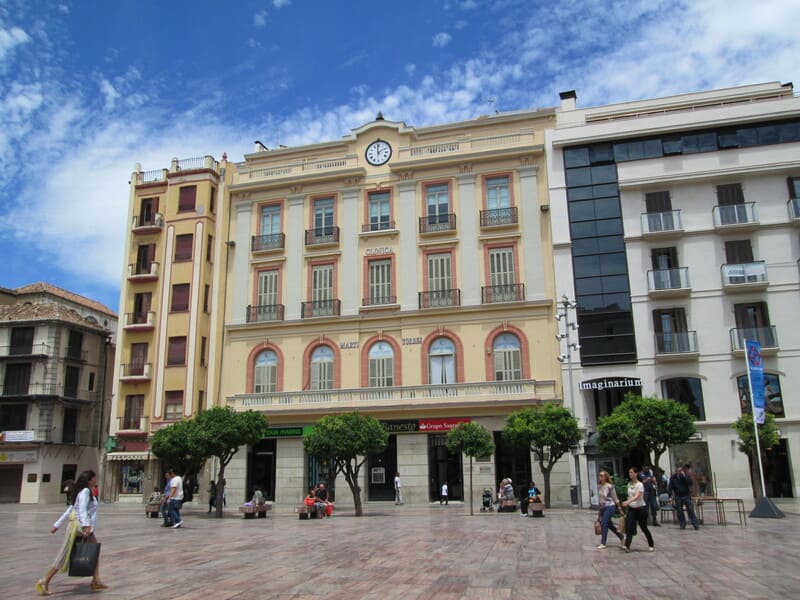
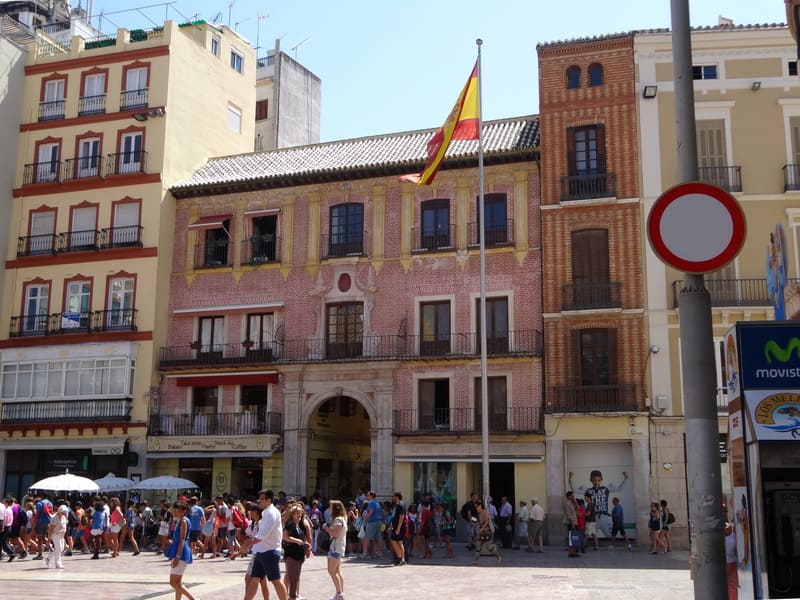
One of the main attractions of the Plaza de la Constitución is its architecture. The square is surrounded by buildings of different styles, which gives it a great architectural diversity. Among the most important monuments are the City Hall of Malaga, a neoclassical building dating from the eighteenth century, and the Church of San Agustin, a clear example of Andalusian baroque style.
Another highlight is the fountain in the square, which has been restored several times over the centuries. The fountain, which is located in the center of the square, is a symbol of the importance of this place as a
Current importance as a cultural and social center
Today, the Plaza de la Constitución is a nerve center of cultural and social life in Malaga. The square hosts events such as fairs, markets, and open-air exhibitions, making it one of the most dynamic spaces in the city. Throughout the year, the square is filled with cultural activities, such as concerts and theatrical performances, especially during the Easter and Christmas festivities.
In addition, the Plaza de la Constitución is the meeting place for locals and tourists. Its cafes and restaurants offer the opportunity to enjoy the local gastronomy, especially Malaga tapas, while enjoying the lively atmosphere of the square.
Nearby tourist attractions
The Plaza de la Constitución is located in the historic center of Malaga, which makes it an ideal starting point for exploring other nearby tourist sites. Just a few minutes walk away you will find the
Another place nearby is the Picasso Museumwhere art lovers can enjoy a large collection of works by the painter from Malaga. From the square, you can walk to the Atarazanas Market, a traditional market that offers a wide variety of local and fresh products, and is an excellent place to taste the flavors of the region.
Finally, a short distance away is the Alcazaba of Malagaa Muslim fortress built in the eleventh century that offers stunning views of the city and the Mediterranean Sea.
Malaga’s Plaza de la Constitución is a place that not only offers a wealth of history, but also remains a vital meeting point for the people of Malaga and one of the city’s main tourist attractions. Over the centuries, it has witnessed great changes, but remains a reflection of Malaga’s identity and character. If you visit the city, you can’t miss the opportunity to enjoy the square and all the nearby sights that surround it – it’s a place full of history, culture and life!


