
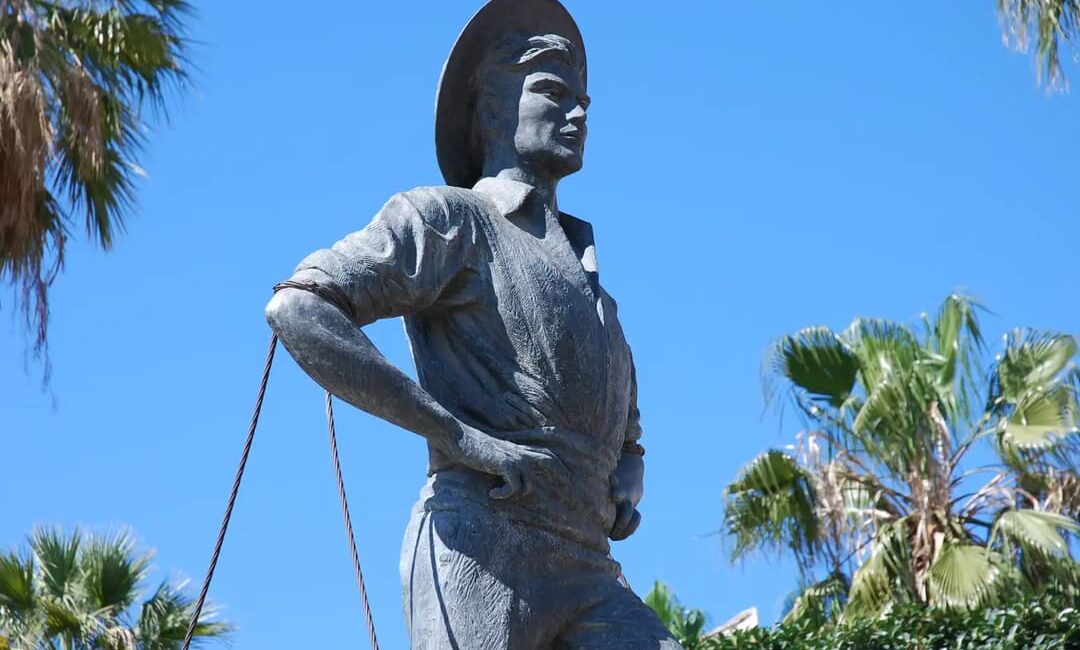
Malaga, city of light and sea, is deeply marked by its traditions and popular characters. One of its most recognized symbols is “El Cenachero”, a figure that, beyond its artistic value, embodies the essence of the city’s fishing and commercial past. This iconic character is remembered through a sculpture located in the center of Malaga, a tribute that connects locals and visitors with the history and character of this Mediterranean city. In this article, we will explore who the cenachero was, his importance in Malaga’s culture and the nearby monuments that complement a visit to this fascinating city.
The Cenachero: A figure of Malaga’s fishing tradition
The term “cenachero” refers to a fish seller who carried and offered his merchandise in cenachos, baskets made of esparto grass, balanced on his shoulders. These men were a common sight in Malaga during the 19th and early 20th centuries, and played a key role in the distribution of fresh fish in the streets and squares of the city.
The cenachero would get up early in the morning to go to the port or to the small boats where the fresh fish arrived. There, he would load the cenachos with different types of fish – anchovies, sardines, horse mackerel, among others – and walk through the city loudly touting the freshness of his merchandise. Sometimes, he would travel long distances, from the coast to the farthest neighborhoods. With his characteristic tone of voice and the rhythm with which he moved the baskets in balance, the cenachero was part of the daily life of coastal Malaga.
With the passing of time and the modernization of the distribution systems, the cenacheros disappeared, but their figure remains rooted in the memory of the city. Their life and profession were immortalized in the monument that we can see today in the Plaza de la Marina, in the center of Malaga.
The Monument to the Cenachero
The statue of the Cenachero was inaugurated in 1968 and is the work of the Malaga sculptor Jaime Fernández Pimentel. The sculpture is made in bronze and presents a detailed and dynamic image of the cenachero, with baskets full of fish hanging from his outstretched arms, ready to offer his product to passers-by. The gesture of balance with the baskets, the typical clothing of the fishermen of the time and the determined expression of the face perfectly capture the identity and industriousness of this historical character.
The sculpture is located in the Plaza de la Marina, a strategic place for both locals and tourists, as it is one of the main connections between the port and the historic center. From there, visitors can enjoy a view of the port, Malaga Park and some of the city’s most iconic monuments.
Discover the authentic tapas of Malaga We are waiting for you for an unforgettable gastronomic experience in the heart of the city! Visit us at La Tasquita de En Medio and let yourself be surprised by our flavors.
Monuments near Cenachero
If you find yourself in the Plaza de la Marina to admire the monument to the Cenachero, there are several places of historical and cultural interest that you can visit within walking distance, making the visit an excellent opportunity to delve into the rich heritage of Malaga.
1. The Cathedral of Malaga
Just a few minutes walk from the Plaza de la Marina is the impressive Cathedral of Malaga, affectionately known as “La Manquita” because of its unfinished south tower. The construction of this cathedral began in the 16th century on the remains of the old Arab mosque, after the Reconquest of the city by the Catholic Monarchs in 1487. The cathedral combines Gothic, Renaissance and Baroque elements, making it a fascinating example of architectural evolution.
The main façade is one of its great attractions, with its imposing columns and ornamental details. In addition, the interior of the cathedral houses an altarpiece of great beauty, as well as several chapels that display works of religious art of great value.
The Cathedral of Malaga is, without a doubt, one of the obligatory visits after meeting the Cenachero, since it is part of the historical heart of the city.
2. The Roman Theater and the Alcazaba
A little further east, about 10 minutes walk from the Plaza de la Marina, we find two of the most emblematic monuments of Malaga: the Roman Theater and the Alcazaba.
The Roman Theater is one of the most important vestiges of the Roman period in Malaga. It was discovered in 1951 and dates from the first century B.C., in the time of Emperor Augustus. Today, it is possible to visit its remains and attend cultural activities and theatrical recreations that take place in this space throughout the year.
Just behind the theater, stands the Alcazaba of Malaga, a Muslim fortification dating from the 11th century. The Alcazaba is one of the best examples of Muslim defensive architecture in Spain, with its courtyards, gardens and walls offering spectacular views of the city and the port. This monumental complex transports visitors back to the times when Malaga was part of Al-Andalus, and is a fascinating journey through the region’s medieval history.
3. Malaga Park
Just a few steps from the monument to the Cenachero extends the Malaga Park, one of the green lungs of the city. This park, inaugurated at the end of the 19th century, is characterized by its lush vegetation and its landscape design, inspired by Renaissance and Baroque gardens. Strolling along its paths is a relaxing experience, with numerous fountains, benches and sculptures that invite you to rest.
The park is home to a variety of exotic and Mediterranean plants, as well as monuments commemorating illustrious figures from Malaga’s history. It is a perfect place to take a break after touring the nearby monuments.
4. The Port of Malaga and Pier One
The Port of Malaga, located in front of the Plaza de la Marina, is one of the oldest ports in the Mediterranean and, in recent years, has been revitalized as a modern commercial and leisure area. Muelle Uno is a promenade lined with stores, restaurants and art galleries, such as the Centre Pompidou Malaga, an extension of the famous Parisian museum.
From the port, visitors can enjoy panoramic views of the sea and Mount Gibralfaro, where the Gibralfaro Castle is located, another important fortification dating back to the Muslim period, which offers a complete perspective of the city from the heights.
Come and enjoy the best tapas at La Tasquita de En Medio. Immerse yourself in the authentic Malaga flavor in our cozy tapas bar in the center of Malaga! Book your table now at La Tasquita de En Medio and live a unique gastronomic experience.
The monument to the Cenachero is much more than a simple sculpture in the heart of Malaga. It is a tribute to a fundamental figure in the history and culture of the city, reminding us of the fishing and commercial legacy that has shaped Malaga’s identity. In addition, its strategic location in the Plaza de la Marina allows visitors to access some of the most important monuments of Malaga, such as the Cathedral, the Roman Theater, the Alcazaba, the Malaga Park and the Port. These places, together with the figure of the cenachero, make Malaga a unique destination, where history and modernity meet at every step.
Visiting the Cenachero is an excellent excuse to further explore this city full of charm, tradition and culture, which continues to captivate everyone who visits it.


