
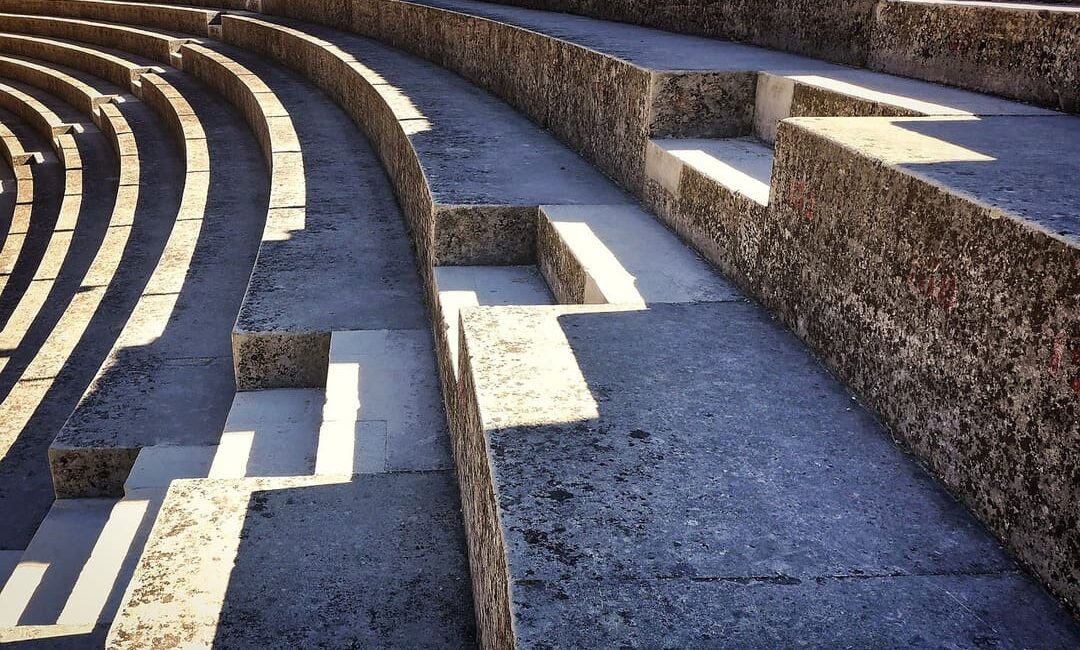
The Roman Theater of Malaga is one of the oldest and most emblematic archaeological treasures of the city, and at the same time one of the monuments that offers more testimonies about the Roman past of Malaga, known at that time as Malaca. Located at the foot of the Alcazaba, in the historic center, this theater stands as a symbol of the Roman presence in the city and a space of connection with the past. In this article, we will explore its history, characteristics and the monuments that surround it, making this visit an essential experience for those who wish to discover the historical soul of Malaga.
History of the Roman Theater of Malaga
The Roman Theater of Malacca was built in the first century B.C., under the rule of Emperor Caesar Augustus, which makes it one of the oldest examples of Roman architecture in the Iberian Peninsula. During its period of splendor, the theater was a central place in the social and cultural life of Malacca, being the scene of theatrical performances and public shows, which attracted citizens of various social classes.
The theater was used until the third century A.D., when the barbarian invasions and political changes in the Roman Empire caused the decline of the cities and their infrastructure. During the medieval period, in the 8th century, when the Muslims arrived in Malaga, the theater fell into disuse. In fact, much of its structure was reused for the construction of the nearby Alcazaba, a typical example of how later civilizations made use of the remains of previous eras to erect their own monuments.
This ancient Roman theater was hidden for centuries, until it was rediscovered in 1951, when work began on the construction of a building attached to the Casa de la Cultura. It was then that the first remains of what would later be identified as the Roman Theater appeared. Today, it is one of the most important archaeological sites in the city and a testimony to the splendor of Roman Malaga.
Live the authentic experience of tapas Visit us in the center of Malaga and taste our specialties! Book now at La Tasquita de En Medio and enjoy a unique evening.
Characteristics of the Roman Theater
The Roman Theater of Malaga has a semicircular floor plan typical of Roman theaters, with a capacity for about 1,000 spectators, which shows the importance it had in its time. The theater is divided into several fundamental parts:
- The Cavea: It is the area where the spectators were seated, arranged in semicircular tiers. The cavea is divided into three main sectors according to the social status of the audience: the lower part(ima cavea), for the highest ranking citizens; the middle part(media cavea), for the middle class; and the upper part(summa cavea), where the rest of the citizens were accommodated.
- The Orchestra: Located between the cavea and the stage, the orchestra was a semicircular area reserved for the most important personalities of the city, such as magistrates and senators. In Malaga, as in other Roman theaters, it was a prominent area that was usually decorated with marble.
- The Proscenium: The stage itself, where the theatrical representations took place. This part was the platform where the actors acted and the scenery was placed. The proscenium of the Roman Theater of Malaga preserves part of its original decorations, which allow us to imagine the magnificence of the shows that took place there.
- The Scaenae Frons: It was the architectural background of the stage, decorated with columns and statues that gave a majestic touch to the set. Although the scaenae frons of the Roman Theater of Malaga is not completely preserved, archaeological studies have made it possible to reconstruct its original layout.
Today, visitors can tour the theater and sit in its stands, imagining what the shows that gathered Roman citizens in this space would have been like.
Interpretation Center
The Roman Theater of Malaga has an Interpretation Center that is located right next to the entrance of the theater. In this space, visitors can get a more detailed view of the history and context of the theater through explanatory panels, models and archaeological remains that have been recovered. It is a recommended visit for those who wish to delve into the history of Roman Malaga and understand the impact of this culture on the city.
Monuments near the Roman Theater
The Roman Theater is not only fascinating for its historical and archaeological value, but also for its strategic location in the heart of the historic center of Malaga. Around this monument, visitors can explore other sites of great interest that are part of the cultural richness of the city.
1. The Alcazaba of Malaga
Just behind the Roman Theater stands the imposing Alcazaba of Malaga, one of the best preserved Muslim fortresses in Spain. Built in the 11th century by the Muslim rulers of the Hammudid dynasty, the Alcazaba was a key defensive point during the Islamic domination of Al-Andalus.
The fortress has an intricate system of walls, defensive towers and interior gardens that transport the visitor back to medieval times. In addition to its architectural and defensive value, the Alcazaba offers impressive panoramic views of the city, the port and the Mediterranean Sea. A walk through its courtyards, surrounded by fountains and vegetation, is a unique experience that perfectly complements the visit to the Roman Theater.
2. Gibralfaro Castle
Located on top of the hill overlooking Malaga, the Gibralfaro Castle is another of the historical jewels of the city. This castle, built in the 14th century to reinforce the defense of the Alcazaba, offers the best views of the city and the port. Visitors can climb a steep path that connects the Alcazaba with the castle, enjoying a walk that reveals the defensive power that had the Muslim Malaga.
The castle houses a small military museum that explains the history of this defensive bastion, and its towers and walls offer a unique perspective of the city.
3. The Cathedral of Malaga
A few minutes walk from the Roman Theater is the Cathedral of Malaga, one of the most important works of the Spanish Renaissance. Popularly known as “La Manquita” due to its unfinished south tower, the cathedral is one of the most visited monuments in the city. Its construction began in the 16th century, on the former site of the city’s main mosque, and lasted for more than two centuries, which explains the mixture of Gothic, Renaissance and Baroque styles it presents.
Inside, the cathedral houses an impressive collection of sacred art, including a magnificent wood-carved choir, and chapels containing important pictorial and sculptural works.
4. The Picasso Museum Malaga
Malaga is the birthplace of the famous painter Pablo Picasso, and the Museo Picasso Malaga is a must for art lovers. Located in the Buenavista Palace, a Renaissance building just a few meters from the Roman Theater, this museum houses an extensive collection of Picasso’s works covering all stages of his artistic career. In addition to the paintings, the museum offers temporary exhibitions and cultural activities that explore Picasso’s influence on contemporary art.
Taste the best tapas in Malaga Come to the center and enjoy a unique gastronomic experience! Book your table now at La Tasquita de En Medio and discover our authentic flavors.
The Roman Theater of Malaga is an archaeological jewel that offers visitors a fascinating journey into the city’s Roman past. Its privileged location, surrounded by such impressive monuments as the Alcazaba, the Gibralfaro Castle, the Cathedral of Malaga and the Picasso Museum, makes it an ideal starting point to explore the history and culture of Malaga. This monumental complex not only narrates the evolution of the city over the centuries, but also invites visitors to immerse themselves in the rich heritage left by each of the civilizations that have passed through this land.


