
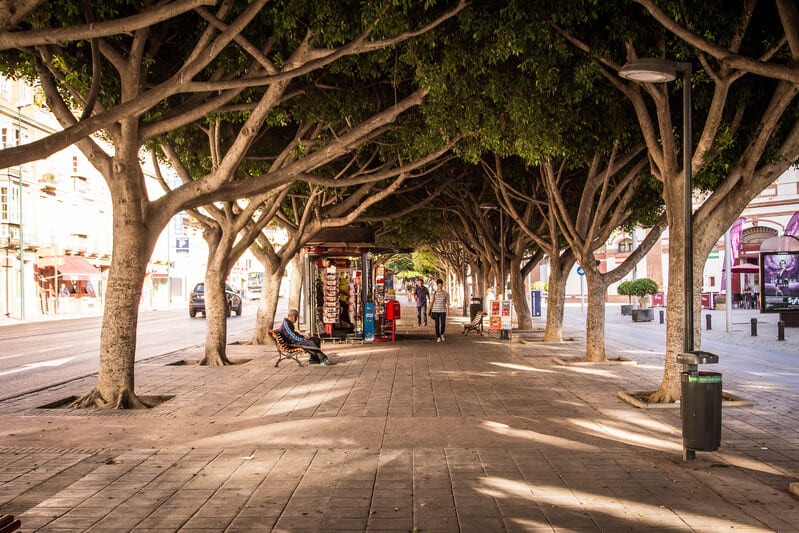
Paseo de Reding: History, architecture and its cultural importance in Málaga
Paseo de Reding is one of the most significant avenues in Malaga, both for its historical value and its contribution to the social and cultural environment of the city. This road, which connects the coastal area with the top of the hill of Gibralfaro, is witness to the transformation of Malaga from its earliest times to the present day. Its rich history, the majesty of its architecture and the influence it has had on the most important historical events of the city, make it one of the most emblematic places of the capital of Málaga.
History of Paseo de Reding: From Old Malaga to Modernity
The Paseo de Reding began to take shape in the early 19th century, in the context of the urban expansion that Málaga experienced after the War of Independence. During that period, the city began to develop beyond its medieval walls, towards the sea and the east. The bourgeoisie, in search of a healthier location overlooking the Mediterranean, began to build their residences in the vicinity of what is now the Paseo de Reding.
The name of this avenue pays tribute to Theodore Reding, a Swiss general who played a crucial role during the struggles against the Napoleonic invasion. Reding was one of the leaders of the troops defending the city and his figure is remembered with pride by the people of Malaga. The tribute to Reding not only underlines the importance of the War of Independence, but also the cosmopolitan character of the city, which received help from various foreign soldiers in its fight for freedom.
Over the centuries, the Promenade de Reding has evolved, both in its layout and in the type of buildings that surround it. During the second half of the 19th century, the promenade was transformed into an upscale residential area, with mansions and palaces that today are an architectural jewel. This consolidated Paseo de Reding as one of the main urban axes of the city.
Don’t miss the best tapas in Malaga! Come to La Tasquita de en Medio and taste the authentic.
Outstanding architecture on Paseo de Reding
One of the great attractions of the Paseo de Reding is its architecture, which reflects the different influences and styles of the historical periods in which it was developed. A walk along the promenade allows you to admire buildings ranging from neoclassical to modernist-influenced.
One of the most outstanding buildings is the Palacio de la Tinta, built in the 19th century. This palace has a neo-Mudejar façade, with details that evoke the Moorish style, and was designed by the architect Pedro de la Torre. The Palacio de la Tinta became one of the symbols of the modernization of Malaga, as it housed the headquarters of the Andalusian Railway Company. This building stands out for its ornamentation and the richness of its details, which give it a distinctive character in the urban landscape of Paseo de Reding.
Another notable building is the Plaza de Toros de la Malagueta, which is located at the beginning of the promenade, near the beach. Built in 1876, this neo-Mudejar style bullring is one of the most famous monuments in Malaga. Its design, inspired by Andalusian architecture, makes it a point of reference for both bullfighting fans and tourists visiting the city.
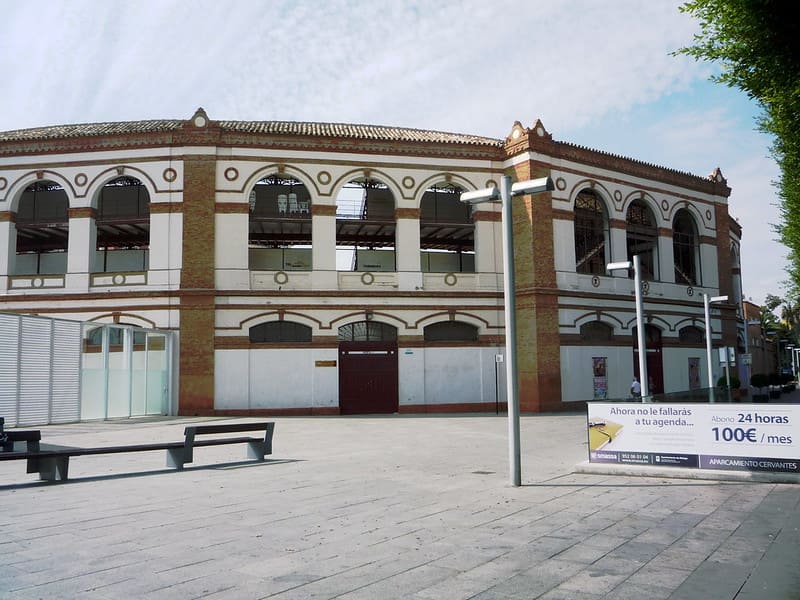
In addition to these monuments, the Paseo de Reding is home to a series of residential and commercial buildings that follow the architectural style of the period, with elegant facades, wrought iron balconies and ornamental details that give it a refined air. These architectural elements not only make the promenade a picturesque place, but also constitute a testimony to the social and cultural history of Malaga.
The Paseo de Reding in the history of Malaga: Role in important events
Over the years, the Paseo de Reding has witnessed numerous historical events that have marked the life of the city. One of the most important was its participation in the defense of the city during the War of Independence. In 1810, Malaga was besieged by French troops, and the streets near Paseo de Reding were the scene of clashes between the Spanish defenders and the invaders. The resistance of the people of Malaga was key to keeping the city in Spanish hands, and the Paseo de Reding became a symbol of that struggle.
In addition, during the 19th century, the promenade witnessed the rise of the Malaga aristocracy, which transformed the area into a luxury residential center. This phenomenon marked Malaga’s transition to a more cosmopolitan city, in which the bourgeoisie acquired a preeminent role in social, cultural and economic life.
The cultural and social importance of the Reding Promenade today
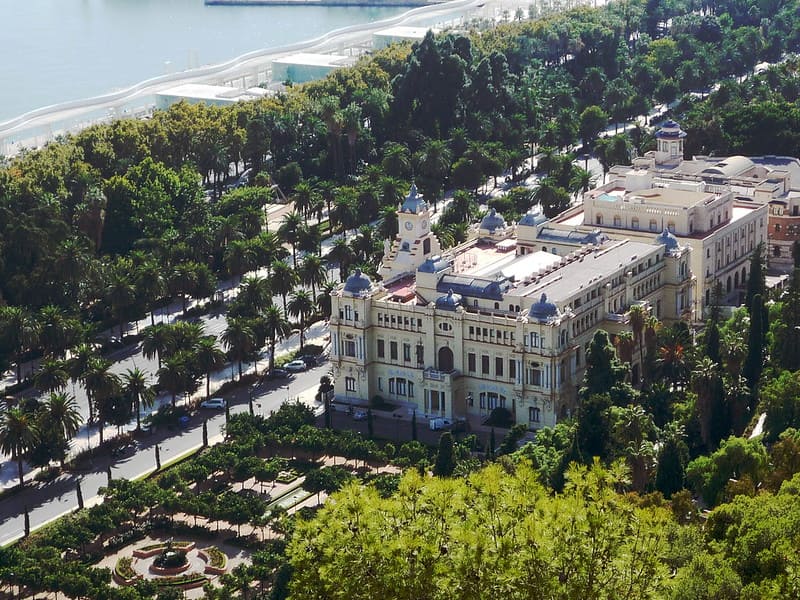
Today, the Promenade de Reding remains a cultural and social center of the city. Along its route, cultural events, exhibitions and outdoor activities are held that attract both residents and tourists. The proximity to the port of Malaga, as well as the Malagueta beach, makes the promenade a place of transit and recreation for those who enjoy the good weather and sea views.
Paseo de Reding is also a meeting place for locals. Its wide sidewalks, the gardens that adorn it and its numerous cafes and restaurants make it an ideal place to stroll, have a coffee or enjoy the local gastronomy. In this sense, Paseo de Reding continues to be one of the focal points of Malaga’s social life.
Places of interest near Paseo de Reding
Paseo de Reding is in a privileged location, surrounded by some of the most emblematic places in Malaga. A few steps from the promenade are the Malagueta beach, the port of Malaga and the Gibralfaro Castle, all of them a must for those visiting the city.
- Plaza de la Malagueta: This lively meeting point is located just at the end of Paseo de Reding, near the beach. The square is famous for its terraces, bars and restaurants where you can enjoy tapas and fresh seafood.
- Gibralfaro Castle: At the end of the Paseo de Reding is the Gibralfaro Castle, a medieval fortress that offers stunning panoramic views of Malaga and its coast. This castle, dating from the 14th century, was built by the Muslims and played an important role in the defense of the city during the Middle Ages.
- Municipal Heritage Museum: This museum, located near Paseo de Reding, houses an important collection of art and historical objects that tell the story of Malaga from its origins to modern times.
Paseo de Reding is much more than just a street in Malaga. Its history, architecture and the role it has played in the most important historical events of the city make it an essential place to understand the evolution of Malaga. Whether for its monuments, its influence on the social life of the city or its proximity to other places of interest, Paseo de Reding is a must-see for anyone who wants to know the essence of this vibrant Mediterranean city.


