Plaza de la Merced: A Historical and Cultural Journey into the Heart of Malaga
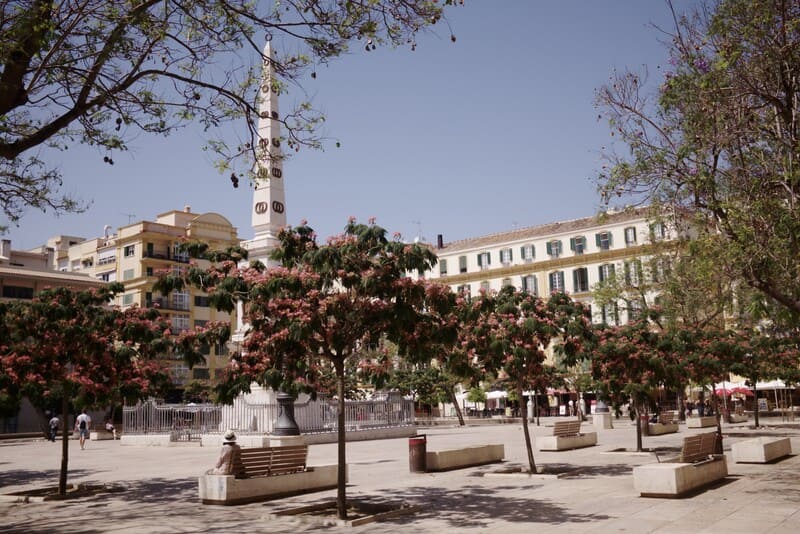
The Plaza de la Merced is, without a doubt, one of the most emblematic and representative places in Malaga. Located in the historic center, this square has witnessed the evolution of the city over the centuries. From its origins in Muslim times to become a cultural and social center of the city, the Plaza de la Merced is a reflection of the history and daily life of Malaga. In this article, we will explore its history, the name changes it has had, the monuments that adorn the square, its historical and cultural importance, and some of the nearby tourist attractions that make it a must-see for every visitor.
The origins of the Plaza de la Merced
The Plaza de la Merced has its roots in Roman times, when the area where it is currently located served as a public space. However, it was not until the Muslim era that the square began to take shape, as it was located outside the city walls. During this time, the area of the Plaza de la Merced was a kind of suburb that developed next to the Muslim almedina.
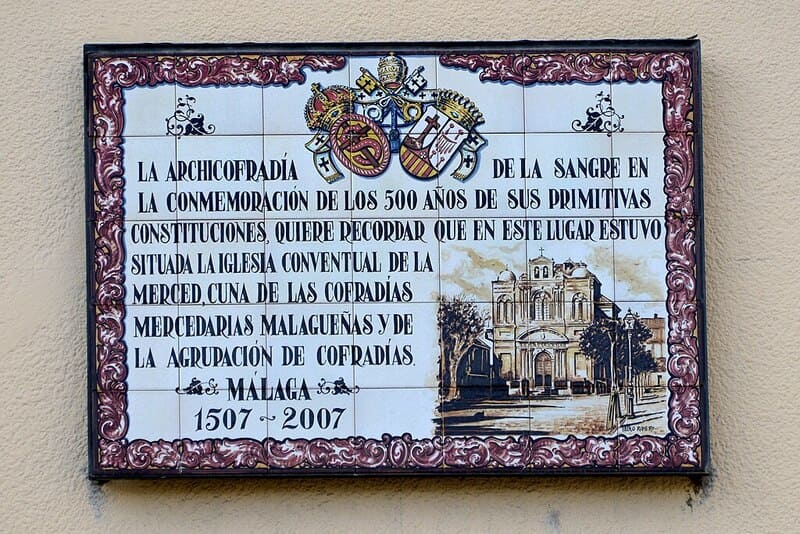
After the conquest of Malaga in 1487 by the Catholic Monarchs, the area began to take on greater importance. In 1490, the Mercedarian friars arrived in the city and settled in a convent that they built in what is now the Plaza de la Merced. This convent, dedicated to the Virgin of Mercy, was the origin of the name of the square. Over the centuries, the square became a central space in the life of the people of Malaga.
Throughout its history, the Plaza de la Merced has undergone several name changes, reflecting the historical events and political changes that the city has experienced.
Market Square: In its early days, the square was known as Market Square, as it was the center of commercial exchanges. During the 15th and early 16th centuries, food and produce markets were held in this open space.
Plaza de Riego: During the French invasion and under the domination of Napoleonic troops, the square was renamed Plaza de Riego in honor of General Rafael del Riego, a key figure in Spanish history during the nineteenth century. This name reflected the political fervor of the time, but it did not last long, since after the withdrawal of the French, the square recovered its original name: Plaza de la Merced.
Plaza de la Merced: Today, the square is still known as Plaza de la Merced, in honor of the convent of the Mercedarios and the Virgen de la Merced. This name has lasted until today, and the square remains a fundamental place for the life of Malaga.
Jwh at Wikipedia Luxembourg, CC BY-SA 3.0 LU <https://creativecommons.org/licenses/by-sa/3.0/lu/deed.en>, via Wikimedia Commons
Its role in historical events
The Plaza de la Merced has been the scene of several historical events that have marked the history of Malaga and Spain.
The Conquest of Malaga: The square witnessed one of the most significant moments in the history of the city: the entrance of the Catholic Monarchs in Malaga in 1487. Although the official entrance of the monarchs was through the gate of Granada, the Plaza de la Merced was located in one of the key areas of the city and was a fundamental place in the process of conquest.
The Fusilamiento de Torrijos: One of the most dramatic moments in the history of the square occurred in 1831, when an obelisk was erected in honor of General José María Torrijos and his companions, who were shot on the beach of San Andrés. Torrijos was a military and political leader who fought for freedom and for the Constitution of 1812, and his death marked an important episode in the country’s history. The obelisk, designed by architect Rafael Mitjana, remains one of the most emblematic monuments of the square.
Hajotthu, CC BY-SA 3.0 <http://creativecommons.org/licenses/by-sa/3.0/>, via Wikimedia Commons
The Plaza de la Merced is home to a series of monuments and architectural elements that make this place a point of historical and cultural interest in Malaga.
The Torrijos Obelisk: This monument, located in the center of the square, was erected to pay homage to Torrijos and his comrades, who fought for democratic values. The obelisk became a symbol of the struggle for freedom in Spain. In addition, the monument houses the remains of Torrijos and the others who were shot.
Pablo Picasso’s Birthplace: At number 15 of the Plaza de la Merced is the house where the famous painter Pablo Picasso was born in 1881. Today, the house houses the Picasso Birthplace Museum, a cultural space that allows visitors to discover the early years of the artist’s life. This house is an important point of interest, since Picasso is one of the most influential artists of the 20th century and one of the most illustrious sons of Malaga.
Sculpture of Picasso: Next to Picasso’s birthplace, there is a statue of the painter from Malaga. This sculpture, made by the sculptor Francisco López Hernández, represents the young Picasso and is one of the most recognizable images of the square. Visitors can have their picture taken next to the sculpture, making it a popular meeting place.
The Plaza de la Merced as a Cultural and Social Center
Today, the Plaza de la Merced is much more than a historical site. It is a cultural and social center that attracts both locals and tourists. The terraces of cafes and bars fill the square with life, and its benches and outdoor spaces are perfect for relaxing and enjoying the unique atmosphere of this place.
The square also hosts numerous cultural events and festivals, such as open-air concerts, theatrical performances and art exhibitions. These events contribute to make the Plaza de la Merced a reference in the social and cultural life of Malaga.
Nearby Tourist Attractions
The Plaza de la Merced is surrounded by other places of tourist interest that complement the experience of visiting this emblematic place.
Alcazaba of Malaga: Just a few minutes walk from the square, is the Alcazaba, one of the most important fortifications of the Muslim period in Spain. From its walls, visitors can enjoy spectacular views of the city and the Mediterranean Sea.
Cervantes Theater: Very close to the square is the Cervantes Theater, one of the oldest theaters in the city. Numerous theatrical performances and cultural events are held here, making the area an important center of Malaga culture.
Calle Larios: A few minutes walk away, you will find the famous Calle Larios, one of the main commercial arteries of Malaga. This pedestrian street, full of stores and restaurants, is an ideal place to stroll and enjoy the atmosphere of the city.
The Plaza de la Merced is an essential place in Malaga, not only for its architectural beauty and history, but also for its vitality and its role in the social and cultural life of the city. From its origins in the Muslim era to becoming a modern meeting place, the square remains a place full of history, art and tradition. When visiting Malaga, you can’t miss a stop in this emblematic space to discover all that Plaza de la Merced has to offer.
Para ofrecer las mejores experiencias, utilizamos tecnologías como las cookies para almacenar y/o acceder a la información del dispositivo. El consentimiento de estas tecnologías nos permitirá procesar datos como el comportamiento de navegación o las identificaciones únicas en este sitio. No consentir o retirar el consentimiento, puede afectar negativamente a ciertas características y funciones.
Funcional
Always active
El almacenamiento o acceso técnico es estrictamente necesario para el propósito legítimo de permitir el uso de un servicio específico explícitamente solicitado por el abonado o usuario, o con el único propósito de llevar a cabo la transmisión de una comunicación a través de una red de comunicaciones electrónicas.
Preferencias
El almacenamiento o acceso técnico es necesario para la finalidad legítima de almacenar preferencias no solicitadas por el abonado o usuario.
Estadísticas
El almacenamiento o acceso técnico que es utilizado exclusivamente con fines estadísticos.El almacenamiento o acceso técnico que se utiliza exclusivamente con fines estadísticos anónimos. Sin un requerimiento, el cumplimiento voluntario por parte de tu Proveedor de servicios de Internet, o los registros adicionales de un tercero, la información almacenada o recuperada sólo para este propósito no se puede utilizar para identificarte.
Marketing
El almacenamiento o acceso técnico es necesario para crear perfiles de usuario para enviar publicidad, o para rastrear al usuario en una web o en varias web con fines de marketing similares.